
Blue Book Agency
2a perrymead street
London
SW6 3SP
Tisbury, Salisbury
£3,000,000
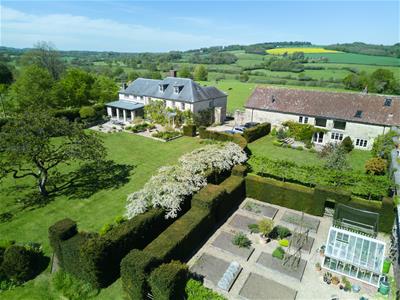
6 Bedroom Country House
- Exceptional contemporary country house extending to over 7,500 sq ft, including a self-contained Cottage and Guildhall
- Beautifully crafted six-bedroom home with elegant reception rooms, bespoke kitchen, and outstanding entertaining spaces
- Remarkably versatile accommodation, ideal for multi-generational living, guest accommodation, home working or ancillary business use
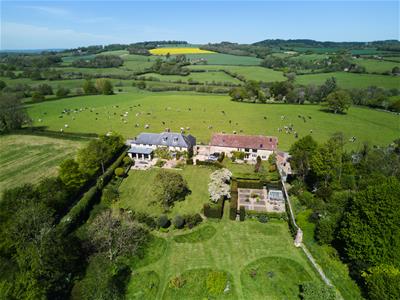
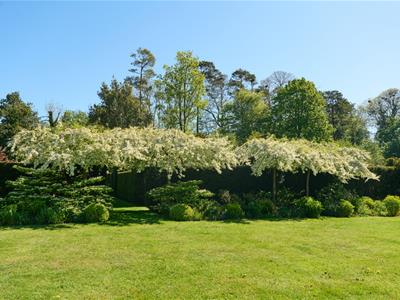
- Stunning landscaped gardens featuring an orchard, productive walled kitchen garden, Victorian-style glasshouse and beautifully arranged outdoor spaces
- Situated in the highly sought-after Vale of Wardour within the protected Cranborne Chase & West Wiltshire Downs National Landscape
- Excellent connectivity, with Tisbury station providing direct rail services to London in approximately two hours, combining idyllic country living with convenient access to the capital
Why We Love Drum House
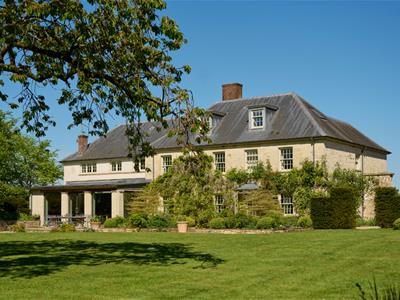
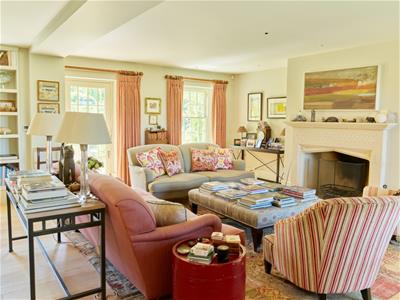
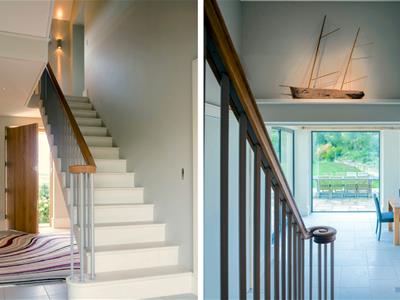
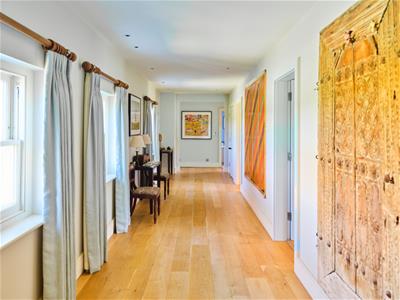
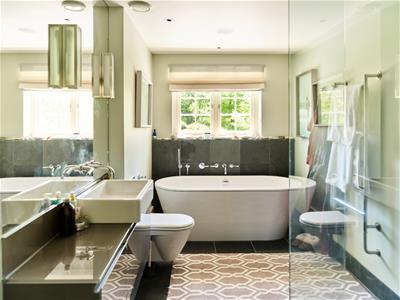
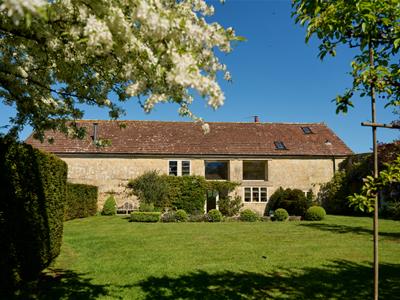
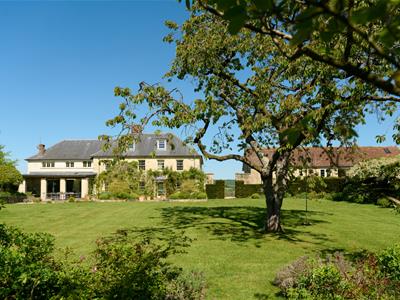
Built in 2010, Drum House is a rare and substantial country property of considerable elegance and versatility, set in the deeply coveted Vale of Wardour, within the Cranborne Chase and West Wiltshire Downs National Landscape. Set amidst the rolling countryside near Tisbury and New Wardour Castle, the property offers just over 7,500 sq ft of accommodation, across three distinct elements - the Main House, a self- contained Cottage and a magnificent Barn formerly called the Guildhall. This is a property of breadth and ambition, equally positioned for family living, multi-generational occupation or to suit a discerning buyer seeking a significant rural retreat with outstanding ancillary potential. Drum House itself is an exceptional family home that combines modern craftsmanship with the elegance and proportions of a traditional country house. The house offers beautifully designed living spaces, filled with natural light and thoughtfully arranged for both family life and entertaining. Meticulously finished throughout by a leading interior designer, it blends sophisticated interiors, high-quality materials and modern technology with beautifully landscaped gardens, creating a home of remarkable comfort, style and practicality.
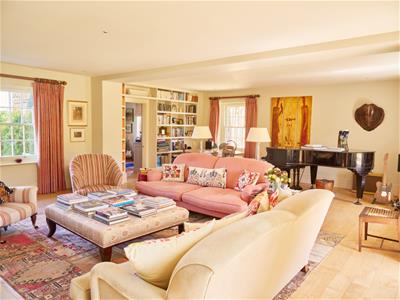
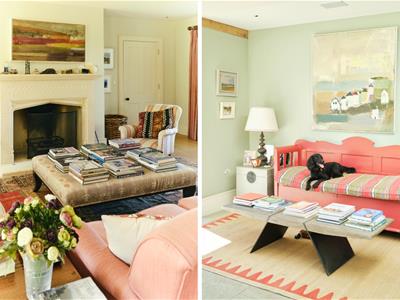
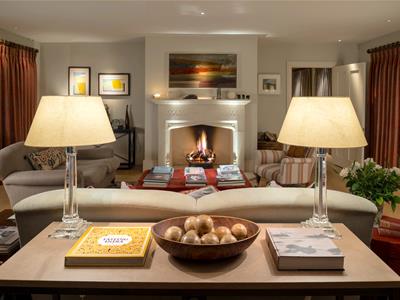
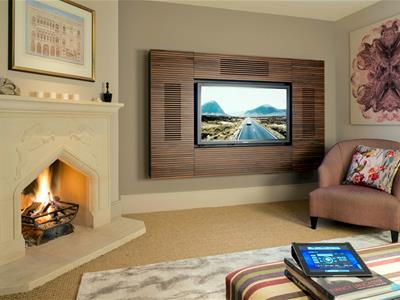
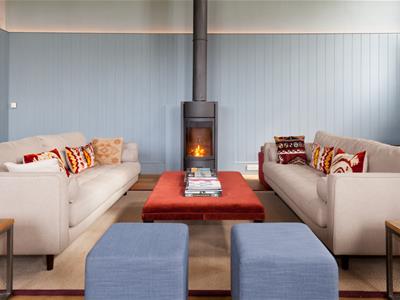
Drum House is arranged over three floors and immediately impresses with the generosity of its proportions. The ground floor is arranged around a welcoming Entrance Hall, from which the principal reception rooms radiate with ease. The Drawing Room is a room of real distinction - a space designed for both intimate gatherings and effortless entertaining. The Family Room, again with a working fireplace, offers a more domestic counterpoint, while the Study provides a quiet sanctuary for those working from home.
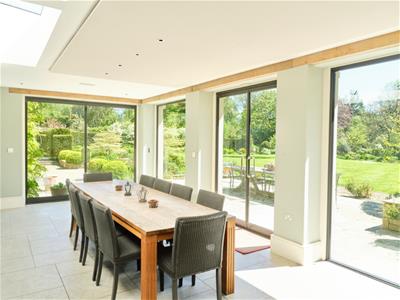
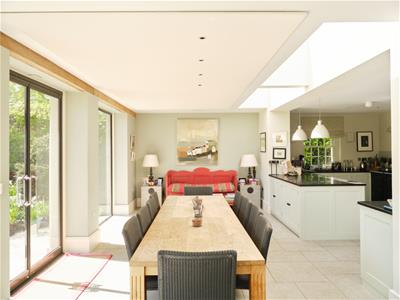
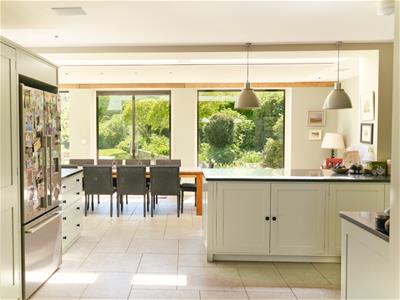
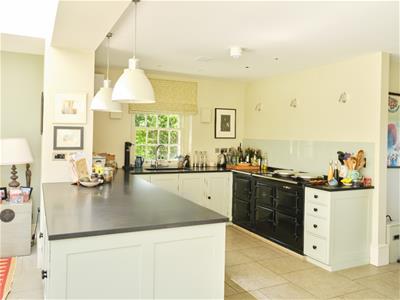
A large family kitchen - set off to one side - comfortably seats ten and is perfectly suited to both informal and formal entertaining. The bespoke fittings are by Wardour Workshop Ltd, built in nearby Semley, and, along with an Aga, are complemented by a Scullery and a generous Utility Room, giving the serious cook every practical advantage.
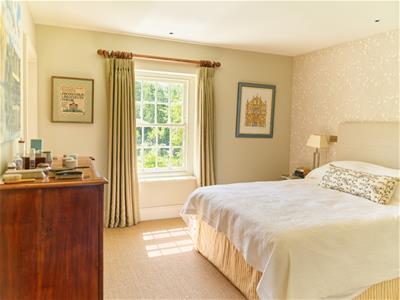
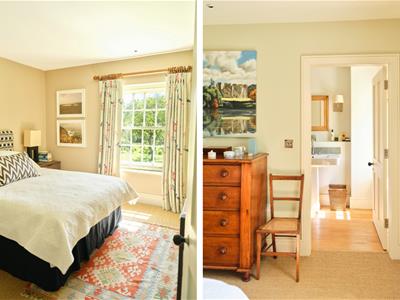
The first floor delivers five well- proportioned bedrooms, arranged around a handsome gallery-style landing. The principal bedroom, complete with fitted wardrobes, enjoys double aspect views overlooking the garden to the landscape beyond, while all the other bedrooms offer excellent family or guest accommodation, each of a comfortable and usable size. The second floor provides further flexibility with a substantial sixth bedroom, together with a Laundry Room, a Store, a Plant Room and a water tank, all of which reflect the thoughtful organisation and practical functionality of the house throughout.
The Guildhall
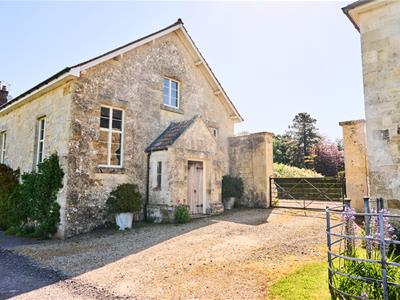
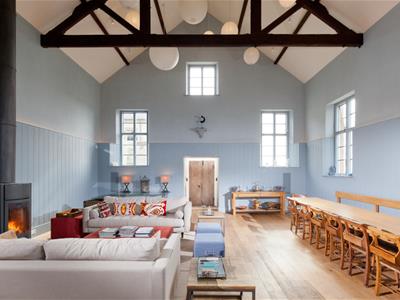
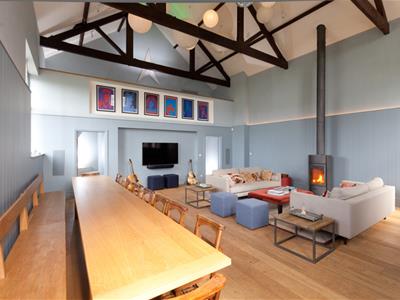
This purpose-built hall, used by the nearby Wardour Estate as a place of entertainment and recreation for the estate workers, is without question one of the most exciting elements of this remarkable property. Arranged over ground, first and mezzanine floors, it has been configured to provide a wealth of flexible space that will lend itself equally to the requirements of a creative studio, a business enterprise, overflow guest accommodation or leisure use. The ground floor includes an impressive room at 26’10” x 24’3” square feet, along with a kitchen, hall and two substantial reception or living spaces. The first floor provides a Bedroom, a Living Room and a generous circulation space, whilst two mezzanine levels add further character and possibility.
The Cottage
The self-contained Cottage provides an entirely independent and charming annexe. On the ground floor a Living Room, Kitchen with Larder and Utility Room provide comfortable everyday living, while the first and second floors accommodate two well- sized bedrooms. The Cottage presents an obvious opportunity as a holiday let, guest accommodation or permanent home for extended family, all whilst maintaining complete privacy from the main house.
Gardens and Grounds
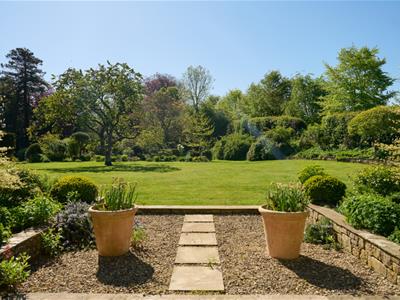
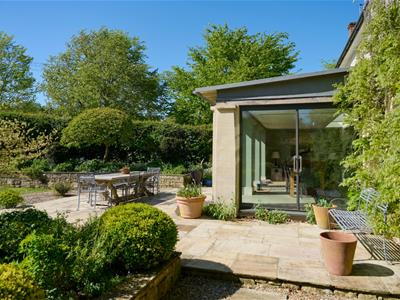
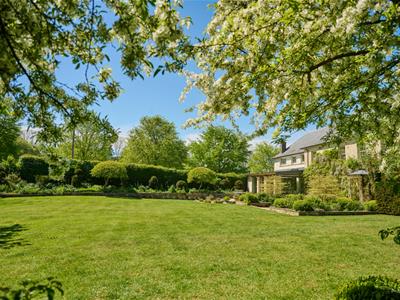
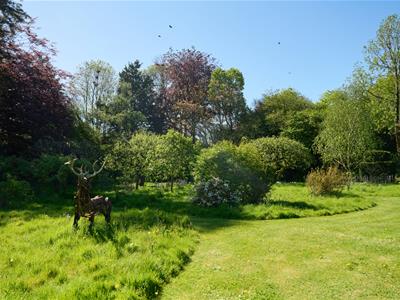
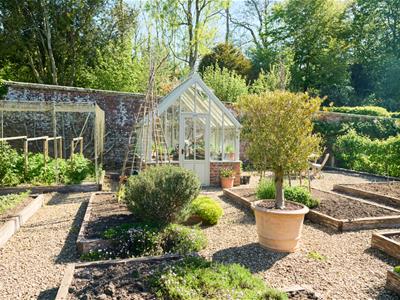
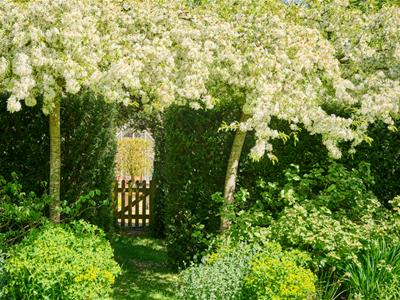
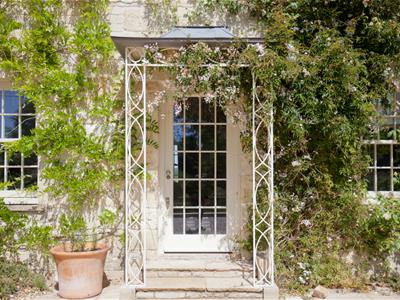
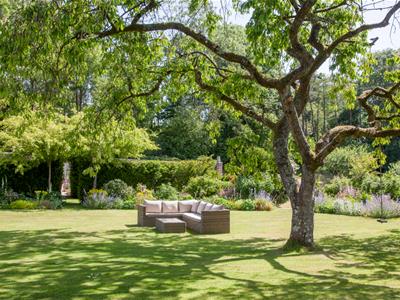
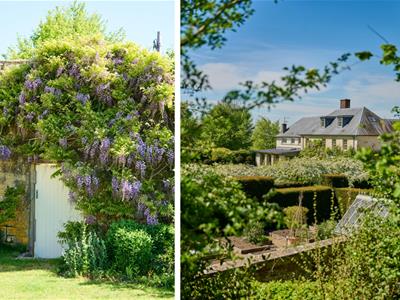
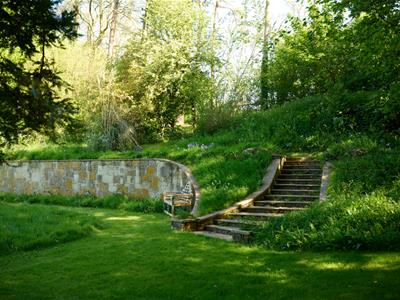
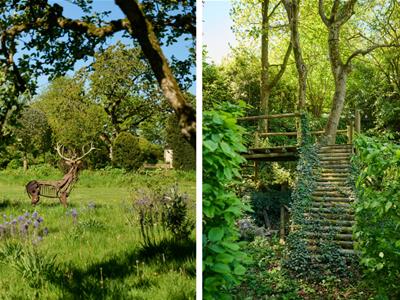
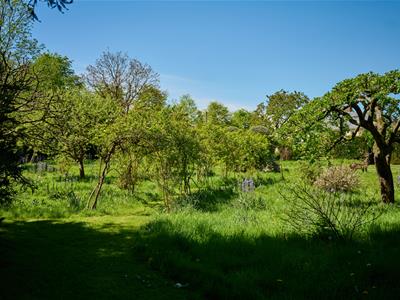
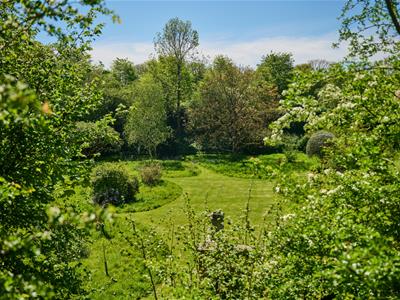
The gardens at Drum House are a particularly attractive feature of the property, combining mature planting with a relaxed and natural character. An established orchard, of gnarled apple trees, provides dappled shade across a meadow left deliberately long, where bluebells and wild iris grow amongst the grass. A mown path leads through the orchard, past hawthorn blossom, towards the honey-stone façade of the house, framed by clipped yew and a series of well-defined hedged garden rooms. The walled kitchen garden offers a more productive space while retaining its considerable charm. A Victorian-style glasshouse, constructed in painted cream timber and glass, sits amongst gravel paths and raised beds edged in weathered oak. Hazel wigwams provide support for climbing beans, while terracotta pots, gathered around the greenhouse, reflect the garden’s practical and well-used nature. A wooden table and folding chair create an inviting spot from which to enjoy and appreciate this peaceful part of the garden.
Chapters Past
As disclosed, Drum House was only built in 2010 yet the Guildhall, which forms part of the property, has a charming social history once serving as the ‘village hall’ for the estate workers at Wardour Castle. Continuing a century-old tradition of putting on entertainment, its intriguing name resonates with a history far removed from this rural idyll in Wiltshire.
Before Drum was built, the site was home to a much-loved house owned by Sally Sampson. When our clients purchased the property, they hoped to preserve and adapt the existing building. Despite their best efforts, however, they soon realised that the most successful future for this enchanting site would be to start afresh. By then, Sally had become a friend, making the conversation all the more difficult. How could they tell her that the house she had cherished was to make way for a new one?
Their solution was simple: the answer would be reflected in the name itself.
Sally’s husband, Anthony Sampson (3 August 1926 – 18 December 2004), was one of Britain’s most distinguished writers and journalists, best known for his biography of Nelson Mandela (Mandela: The Authorised Biography, 1999), for which he won the Alan Paton Prize. In addition, his seminal work, Anatomy of Britain (1962), is an influential examination of the British establishment that became a classic of modern political writing.
In 1951, at the age of just 25, Anthony Sampson received a telegram from his friend Jim Bailey, urging him to take over the editorship of a struggling magazine in South Africa. With a circulation of only 20,000 and losses of £2,000 a month, the publication was in dire need of direction. Sampson left England and spent the next three and a half years transforming The African Drum into what would become known as “the crusading black magazine of the fifties”.
As editor, he championed a remarkable generation of Black African writers and journalists, including Henry Nxumalo, Todd Matshikiza and Can Themba. During his time in South Africa, he also formed a friendship with a young Nelson Mandela, then still in the early stages of his political journey. Years later, in 1964, Sampson attended the Rivonia Trial in support of Mandela and other ANC leaders.
Needless to say, Sally was delighted with the naming of the new house Drum House. A fitting tribute to the site’s history, her late husband, and his influential career during a pivotal period in South Africa’s history. Tisbury’s history stretches back more than 2,000 years. Originally a Saxon settlement, it later prospered through the stone quarries that supplied Salisbury Cathedral and a thriving medieval wool trade. The surrounding area is rich in heritage, encompassing the ruins of 14th-century Wardour Castle, the Palladian splendour of New Wardour Castle and the historic Fonthill Estate. The village also has notable literary connections; Rudyard Kipling frequently visited his parents, John Lockwood and Alice Kipling, who are buried in the churchyard of St John the Baptist. While staying in Tisbury, Kipling is said to have drawn inspiration from the area when writing Kim, using one of the pupils from Tisbury Boys’ School as the model for the novel’s central character.
Living in Tisbury
Tisbury sits in stunning countryside in The Nadder Valley forms part of the Cranborne Chase and West Wiltshire Downs National Landscape, about 13 miles to the west of Salisbury. Its bucolic, gently undulating landscape is ideal for exploring on foot, bicycle or on horseback. This is quintessential chalk downland country, with big skies, ancient hedgerows, hidden valleys and clear chalk streams. Tisbury is the largest settlement within the Cranborne Chase and West Wiltshire Downs National Landscape, meaning the surrounding countryside is legally protected from inappropriate development, so the landscape you love today will still be there in fifty years. For a village of around 2,500 people, Tisbury offers a remarkably rich cultural scene. Messums, a leading London fine art gallery, has established a contemporary arts centre within the village’s historic Grade I listed tithe barn, creating a destination that rivals some of the country’s most celebrated rural galleries. The barn now serves as a multi-purpose gallery and arts venue, hosting a varied programme of exhibitions and events throughout the year. The area is also exceptionally well served for dining and independent shopping. The Beckford Arms at nearby Fonthill Gifford has earned a reputation as one of the region’s finest country pubs, while The Royal Oak at Swallowcliffe, Pythouse Kitchen Garden, The River Barn at Fonthill Bishop and The Compasses at Lower Chicksgrove provide an excellent choice of local dining destinations. The Beckford Bottle Shop, described by The Times as “the most civilised offie in Britain”, sits alongside Tisbury Delicatessen, The Fishmongers, Beaton’s Tearooms and a variety of independent boutiques and everyday shops. Something of a rarity for a rural village, Tisbury is remarkably self-sufficient, providing many of the amenities that are often absent from countryside communities. Residents benefit from medical, dental and veterinary practices, a primary school, post office, swimming pool and a thriving high street, while the Nadder Centre offers a library, fitness suites, sports hall, floodlit tennis and netball courts, café and extensive community facilities. Next door, Tisbury Swimming Pool is the only open-air heated swimming pool of its type in Wiltshire.
Transport
Despite its peaceful rural setting, the village remains highly accessible, with direct rail services to London Waterloo in around 1 hour and 45 minutes and connections westwards to Exeter St David’s.
Old Wardour Castle, 1.3 miles, Tisbury, 2.3 Miles, Salisbury, 17 miles
Tisbury Station 2 miles, (direct services to London Waterloo from 1 hour 44 minutes)
Salisbury Station 16.2 miles (direct service to London Waterloo from 1 hour 20 minutes)
(Distances and times approximate)
Although these particulars are thought to be materially correct their accuracy cannot be guaranteed and they do not form part of any contract.
Property data and search facilities supplied by www.vebra.com