Blue Book Agency
2a perrymead street
London
SW6 3SP
Bowcott Hill, Arford, Headley
£1,850,000
5 Bedroom House
- Grade II listed, Arford House is set in a peaceful and secluded spot, behind a high stone wall and electric gates.
- The current owner has sensitively undertaken substantial improvements to optimise the flow of the house.
- The house sits within a beautifully-landscaped walled garden, which is mostly south-facing.
- Located on the edge of the pretty hamlet of Arford, within easy reach either Haslemere or Farnham for amenities and commuting.
- Direct trains to London Waterloo, from Haslemere Station, taking from 55 minutes.
Why We Love Arford House
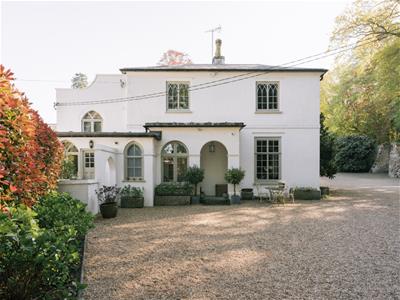
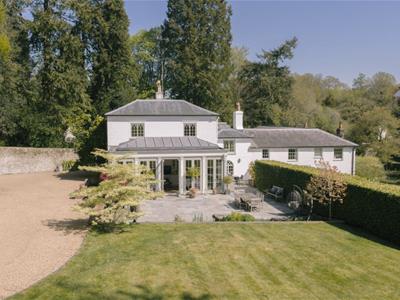
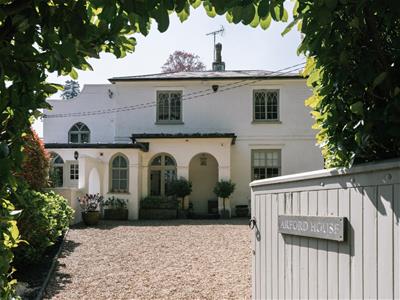
Grade II listed Arford House is a pretty classical structure typical of the Regency period, built of painted stone, stucco and brick beneath a low-pitched hipped slate roof. Its square main block, with a lower eastern wing, is articulated by simple ashlar masonry and Gothic casement windows to the first floor, while a Victorian brick porch with pointed arch forms a dramatic flourish to the entrance.
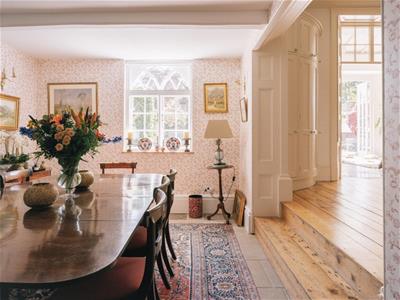
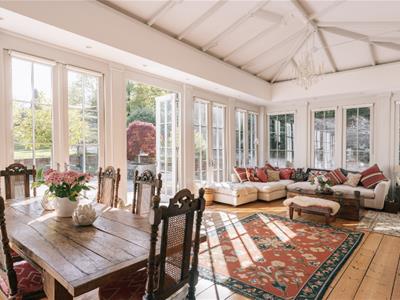
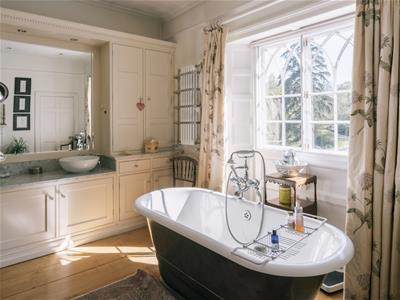
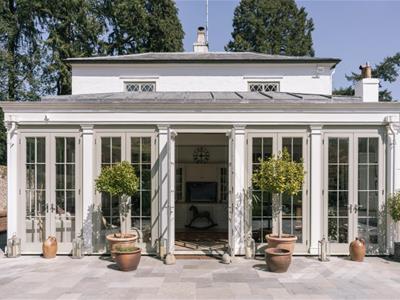
The house is privately set behind a high stone wall with a set of electric gates which open onto a gravel driveway leading up to a gravelled courtyard with plenty of parking next to the house. The current owner purchased Arford House 15 years ago and has sensitively undertaken substantial improvements over this period. This includes transforming a former conservatory into a smart orangery with the help of renowned architect Adam-Smith, reconfiguring the ground floor to optimise the flow of the house, installing a new kitchen, and creating a new bathroom for the master bedroom suite. The house has been decorated to an exacting standard and the interiors are generously proportioned, light and airy with high ceilings.
Accommodation
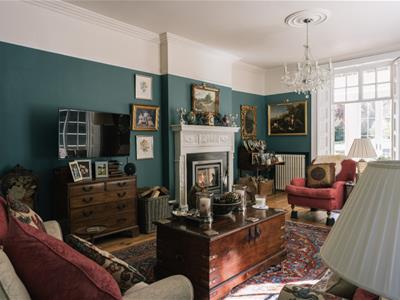
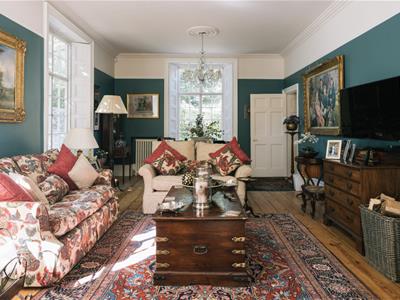
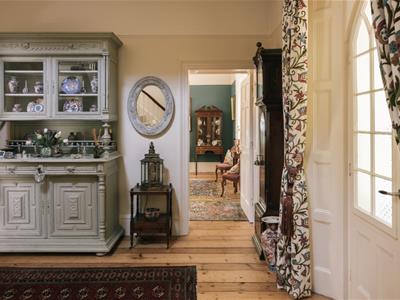
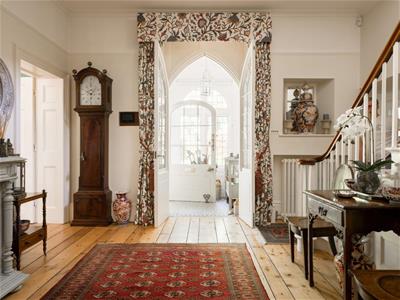
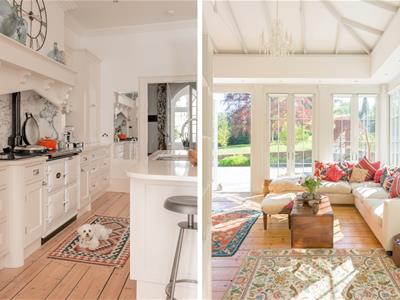
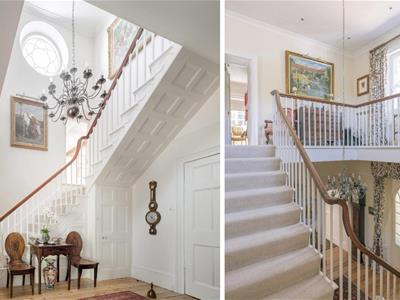
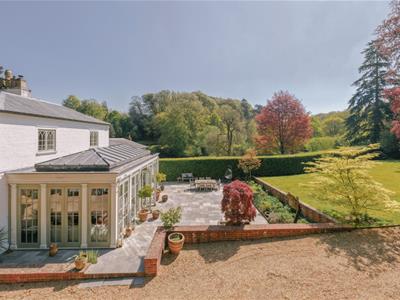
The front door opens into a glazed porch which opens onto a grand double height reception hall with original staircase and period timber flooring, which continues throughout most of the ground floor. The triple aspect drawing room is a fantastic entertaining space, it was previously two rooms which has been combined into one very generous space with a focal wood-burner. The large orangery, which sits at the back of the house overlooking the South-west facing gardens, is a particular highlight of the house. It is a wonderfully light and uplifting space throughout the year and is currently set up with a large informal dining area to one end and a sitting room to the other end. The room features soaring high ceiling, fitted inbuilt bookshelves and cabinetry and five sets of double french doors opening onto an outdoor dining terrace and connect the house with its gardens.
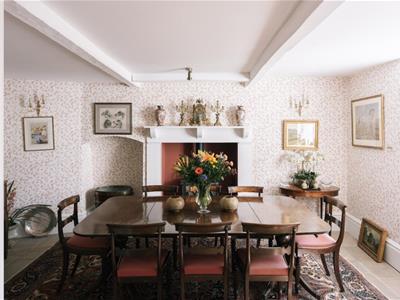
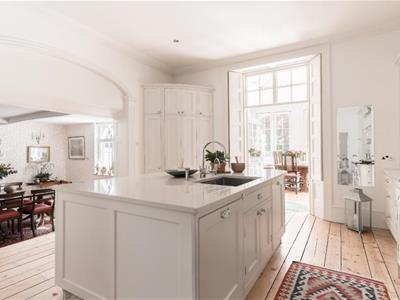
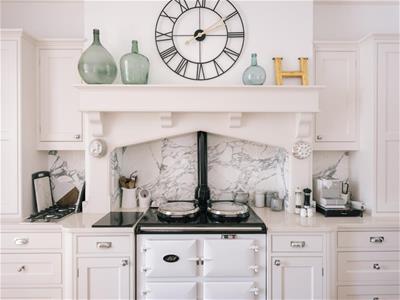
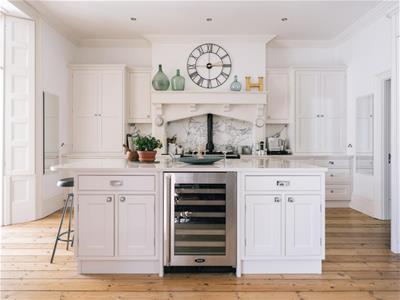
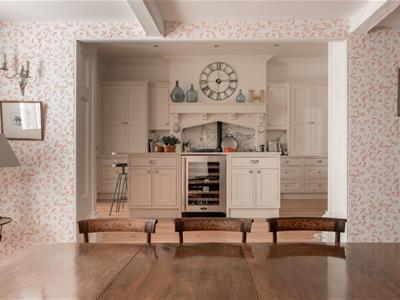
The beautifully appointed kitchen forms an elegant hub to the house. It has been re-configured by the current owners to fit in seamlessly in with regency architecture and smooth lines. The bespoke fitted cabinetry is in a traditional style, painted in a calming warm white. There is a traditional AGA with marble backsplash and a large central island with double sink and Quooker tap. Appliances include a separate gas hob, two separate electric ovens, a steam oven, microwave and Miele dishwasher, and a large integrated fridge/freezer which are all cleverly hidden within the cabinetry to maintain a clean look. The formal dining room with gas fire is conveniently situated next door. A utility/boot room with stone floor and smart inbuilt cabinetry and a separate downstairs loo complete the ground floor.
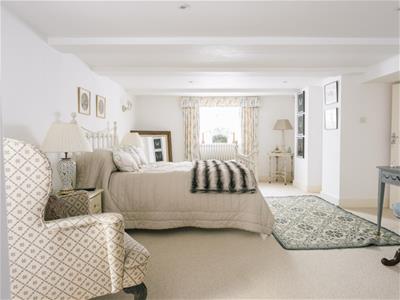
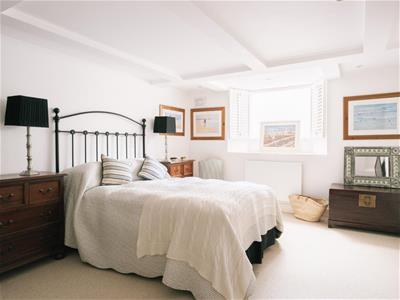
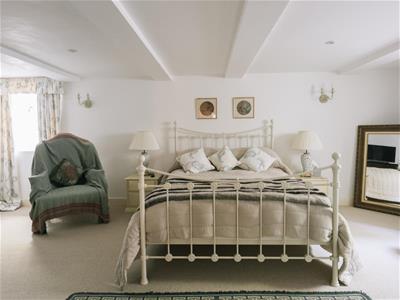
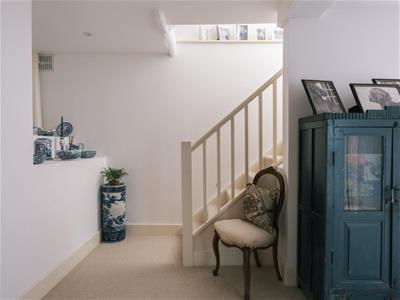
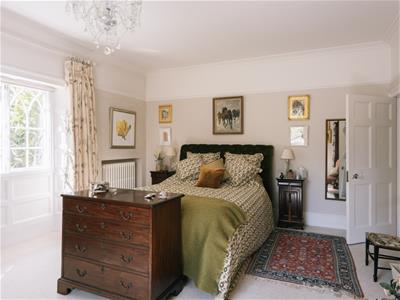
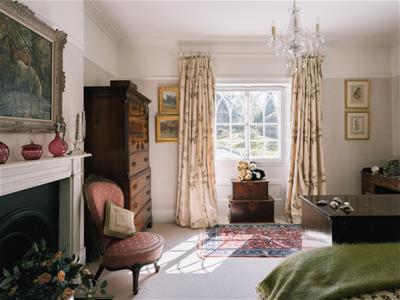
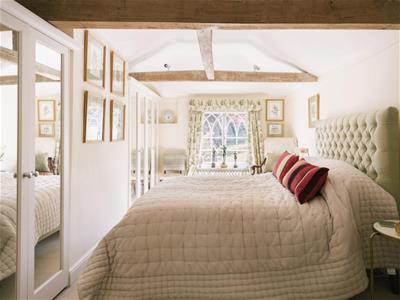
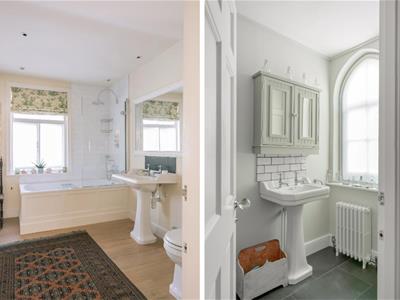
The generous principal bedroom suite is situated on the first floor with dual aspect windows overlooking the garden and pretty period fireplace, and spoiling adjoining bathroom, installed by the current owner and containing a traditional roll-top bath, fireplace and extensive inbuilt cabinetry storage. A second bedroom (currently used as a dressing room) sits across the hall, as does a separate family shower room. There is also another large guest bedroom with ensuite bathroom on this floor. Two further double bedrooms, a storage area with extensive inbuilt wardrobes, a family bathroom, and a sitting/snug area are located on the lower ground floor. This floor has its own separate entrance door with direct access outside, as well as internal access, making it a great flexible space either for guest accommodation, a self-contained annexe or rental potential.
Glorious Garden and Outbuildings
The house sits within a beautifully landscaped walled garden. Entrance gates open onto a gravel driveway with plenty of parking, alongside a detached garage. Planning permission has been granted to replace the existing garage (ref. no. 34418/011) with listed building consent also approved (ref. no. 34418/012).
The garden is mostly south-facing and features a generous paved terrace running across the rear of the house, perfect for outdoor dining and entertaining. Beyond this lies a sweeping lawn bordered by a variety of established shrubs and mature specimen trees.
Private and peaceful, the garden is enclosed by the original stone wall and well-kept hedgerows, creating a wonderfully secluded setting.
Living in Hampshire
Arford House sits on the edge of the pretty hamlet of Arford, home to the popular country pub The Crown, voted best pub in the area in 2025, and within easy reach of Headley and Haslemere. Headley has all the traditional village amenities that you might want including local pub, large village green, village hall, community-run shop and post office, parish church, doctor’s surgery, and playing fields with cricket and tennis club.
There is a fantastic choice of further shopping and amenities on offer in the market town of Haslemere, which does independent shops well with a great choice of boutiques, independent retailers, coffee spots, and restaurants, including The popular Georgian Coppa Club. There is also a choice of supermarkets including a Waitrose.
Haslemere holds a food festival every year and cultural festival every 3 years. The area is also well-catered for on the farm shop side with Mill Lane Farm Shop providing locally grown vegetables and Applegarth Farm Shop offering a smart deli counter and restaurant championing hyper-local produce.
The surrounding countryside is widely recognised for its natural beauty, much of which is owned and protected by the National Trust. It is a exceptional area for walking, cycling and riding with an extensive network of footpaths, bridleways and open heathland, including at The Devils Punch Bowl and Ludshott Common, which is known for its large, vibrant stretches of purple heather. Several distinguished golf courses are located nearby offering a range of heathland and parkland options, including the renowned 18-hole Blackmoor Golf Club (designed by Harry Colt), the 18-hole Hankley Common Golf Club, and Liphook Golf Club.
Transport
Arford House enjoys easy access to excellent connections. Haslemere mainline station is a short 7.2 miles drive away with regular direct trains to London Waterloo taking from 55 minutes. There are also great road links via the A3 which is 3.3 miles away, providing access to central London (48 miles) and Gatwick Airport (44 miles).
Fantastic Schools
The area offers a wide range of state primary and secondary schooling including Liphook Infant and Junior Schools and Bohunt School together with a fantastic choice of independent schools including St. Edmund’s, Highfield and Brookham, Amesbury, Edgeborough, Churcher’s, Frensham Heights, Beadales, and More House.
Haslemere mainline station 7.2 miles (55 minutes to London Waterloo)
Haslemere town centre 7.6 miles | Farnham 8 miles
A3 3.3 miles | Central London 48 miles | Gatwick Airport 44 miles
(All distances and times approximate)
Chapters Past
A prominent architectural landmark in the village, Arford House was built in the early 19th century by William Ewsters (1760–1842). Ewsters is also remembered locally for presented life-size paintings of Moses and Aaron to the parish church of All Saints. Family tradition also maintained that the carved wooden ornament which once crowned the garden summerhouse was the figurehead of the American frigate The USS Chesapeake, which captured by the British during the War of 1812-1815 and later towed back to England and broken up at Portsmouth. Chesapeake Mill at Wickham in the south of the county, was famously built of timber from the same source.
In 1886, Arford House was advertised to let, furnished for £130 per annum or unfurnished for 80 guineas, described as offering three sitting rooms, seven bedrooms, a tennis lawn, meadow, pine wood, stabling, coach house and a five-roomed gardener’s cottage set within some fifteen acres.
In 1896 the tenant was Madame Van de Velde, wife of a Belgian diplomat and daughter of the Italian Ambassador to Berlin. Contemporary accounts describe her as tall, vivacious and notably charming. She was the author of several works on Court and Society, and during her residence Arford House enjoyed regular house parties. Among her visitors was the American writer Bret Harte, a frequent guest in the closing years of the century he no doubt finding rural Headley an agreeable change of scene.
By 1902 the house had been acquired by the Misses Frankland, daughters of Sir Edward Frankland, one of the most distinguished chemists of the Victorian period and a pioneer in the development of valency theory. Miss Dorothy Frankland later married Major Richard Hooper and, for more than forty years, played an active and committed role in village life.
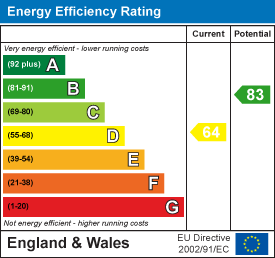
Energy Efficiency and Environmental Impact
Although these particulars are thought to be materially correct their accuracy cannot be guaranteed and they do not form part of any contract.
Property data and search facilities supplied by www.vebra.com